
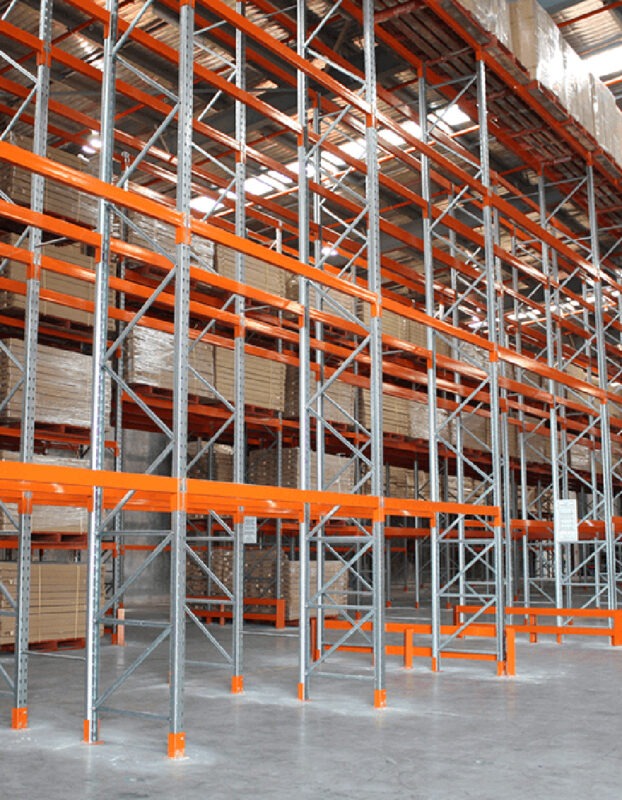



RACKING COMPONENTS
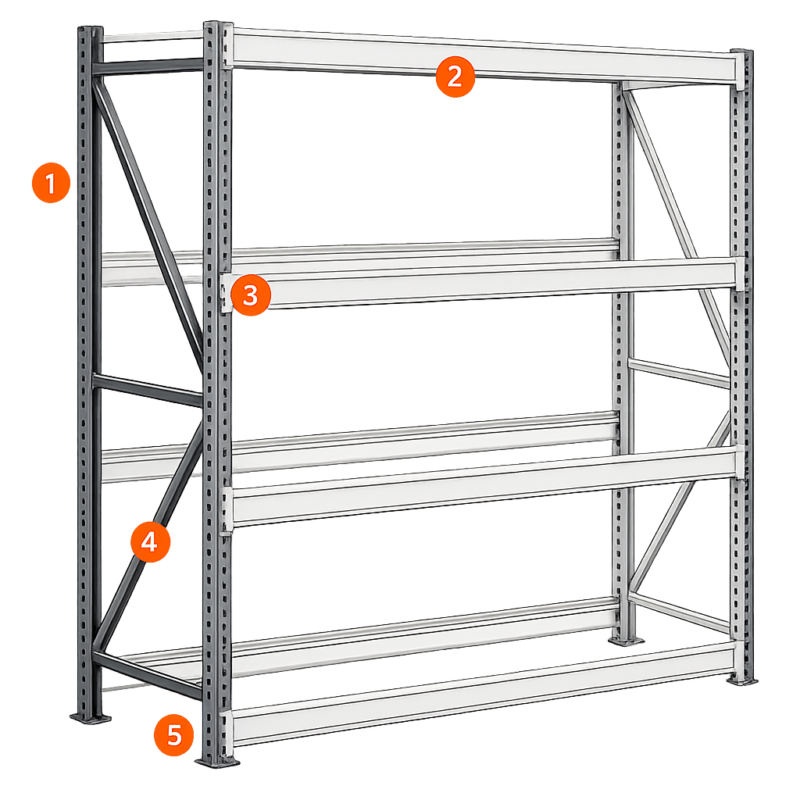
Bay
The space between two adjacent racking frames used to store unit loads.
Beam
The horizontal component that supports pallets or other unit loads.
Beam Connector
The component at each end of a beam that connects the beam to the upright frame.
Bracing
Diagonal or horizontal members that connect the uprights and provide stability to the frame.
Base Plate
The plate at the bottom of an upright that connects the racking frame to the floor.
Upright
The vertical structural member that supports the pallet beams.
Upright Frame
The complete frame assembly consisting of uprights, bracing and base plates.

LOADS & CAPACITY
Unit Load
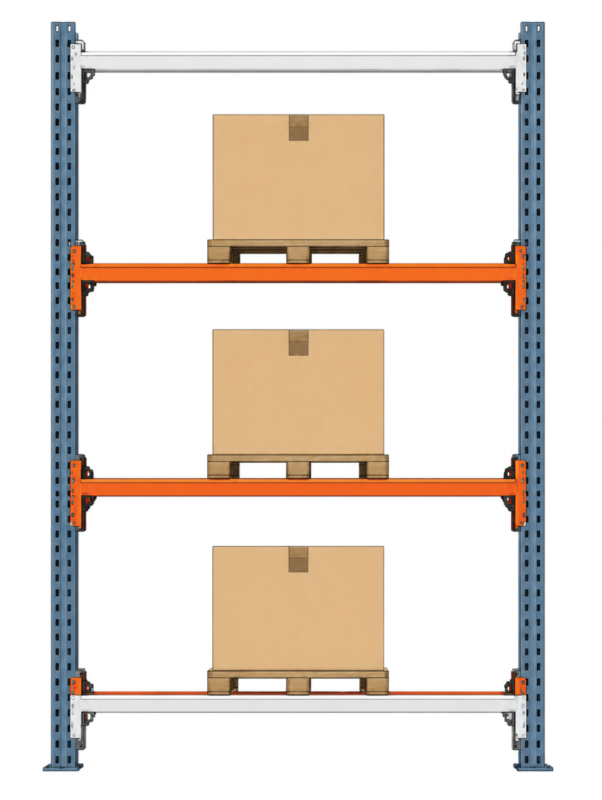
An individual load placed into or retrieved from the racking in a single operation, such as one loaded pallet.
Shelf Load
The combined weight of all unit loads stored on one shelf or beam level.
Bay Load
The combined weight of all unit loads stored within a bay of racking.
Safe Working Load
The maximum load that the racking is designed to safely support when used inits specified configuration.
SWL or Load Sign
Signage displaying important information about the safe loading and configuration of the racking system.


RACKING CONFIGURATION
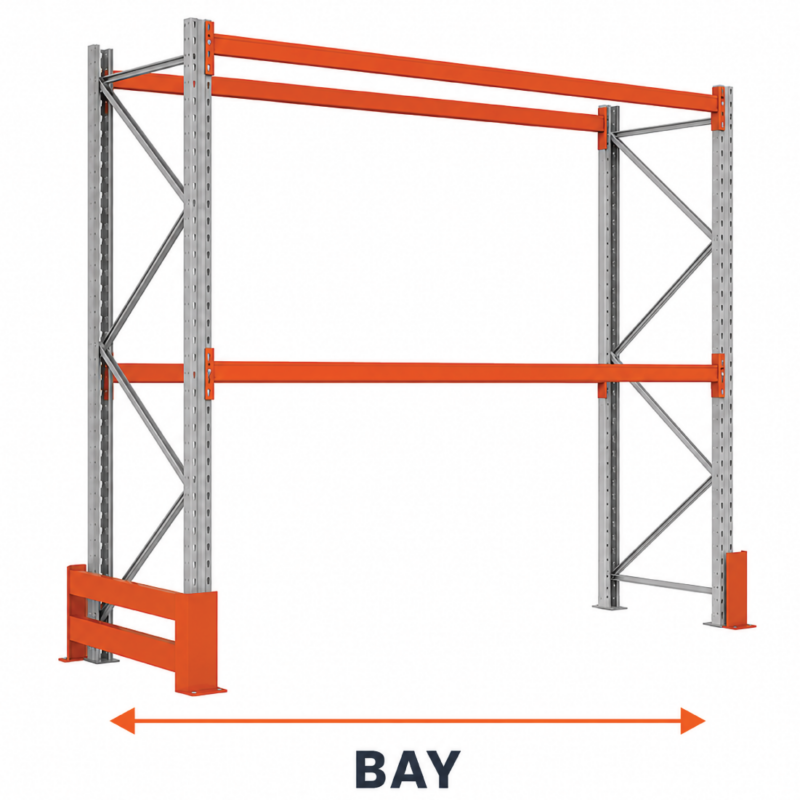
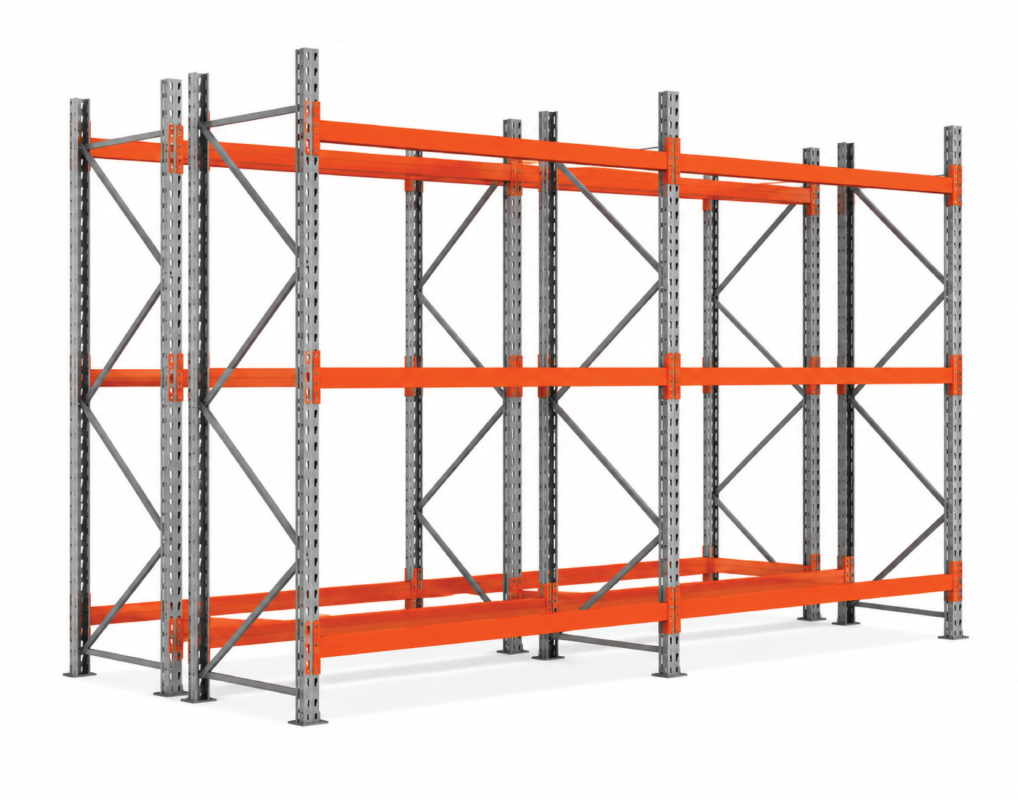
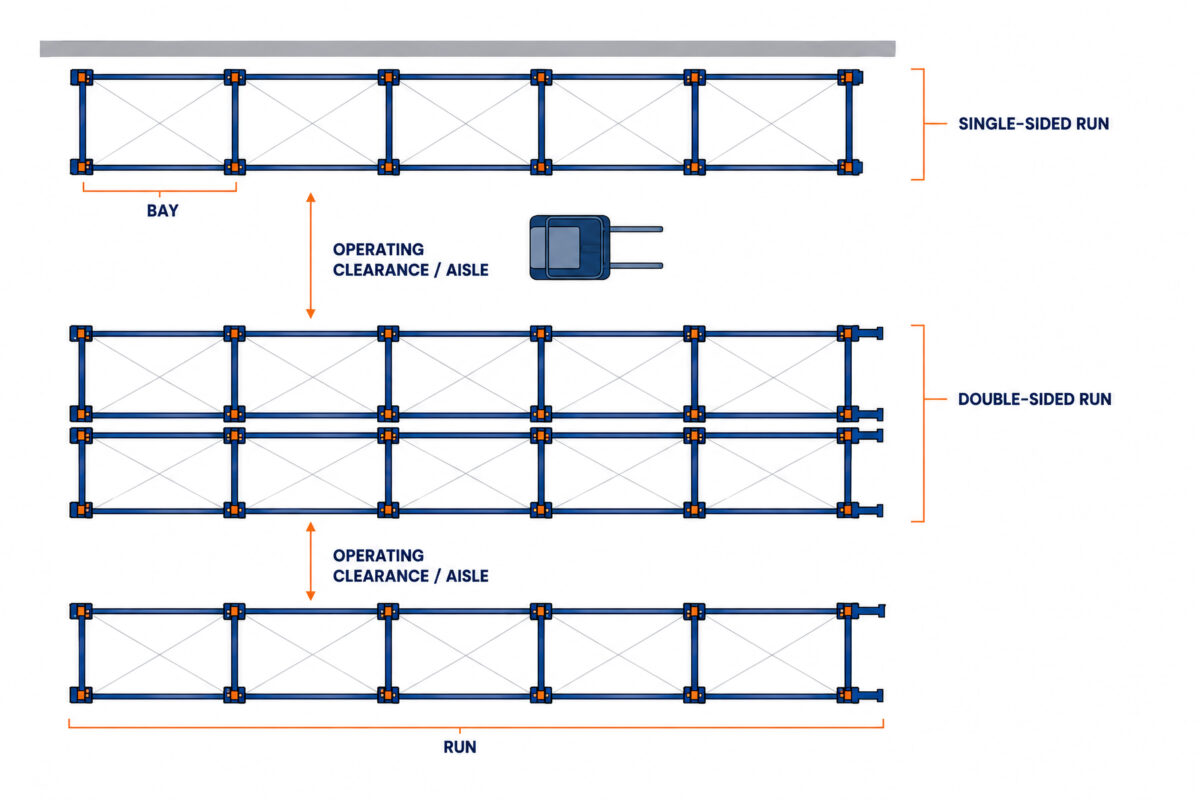
Bay
The space between two adjacent upright frames.
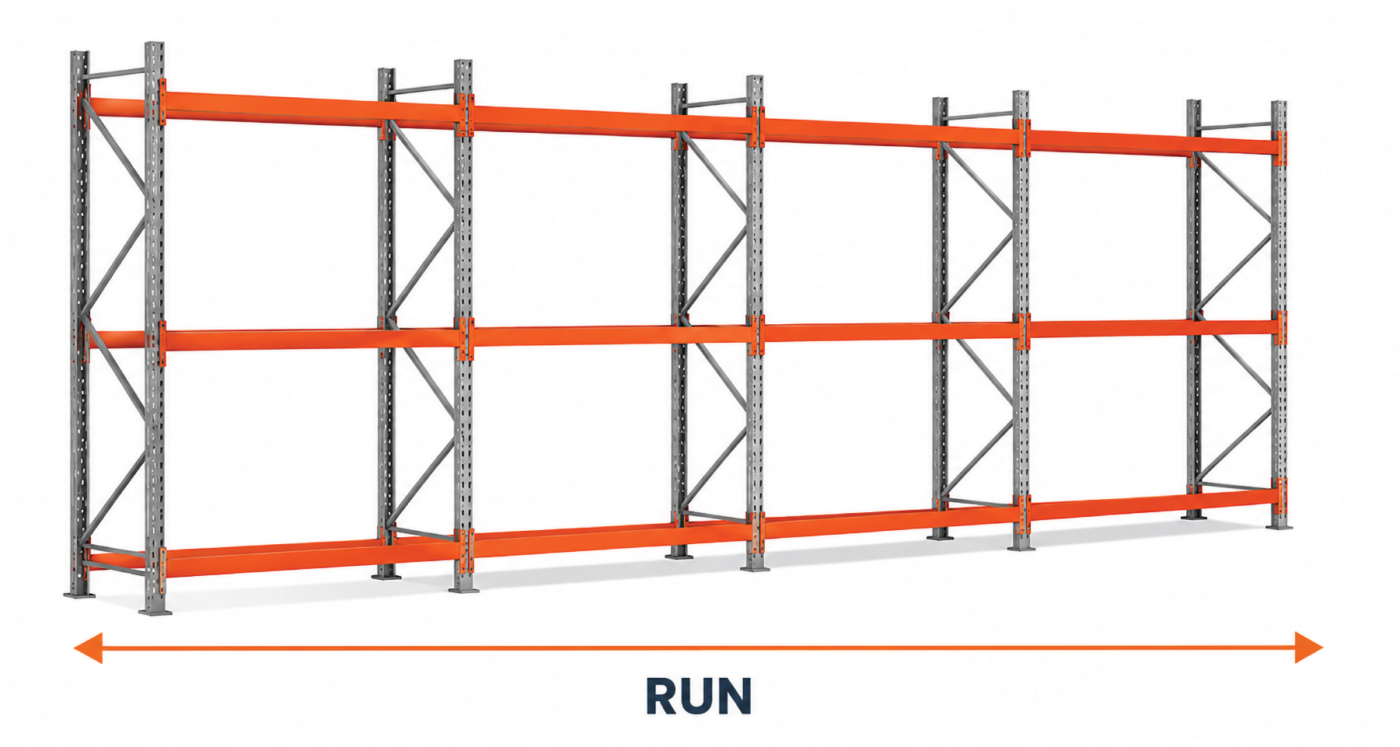
Run
A continuous row of connected racking bays.
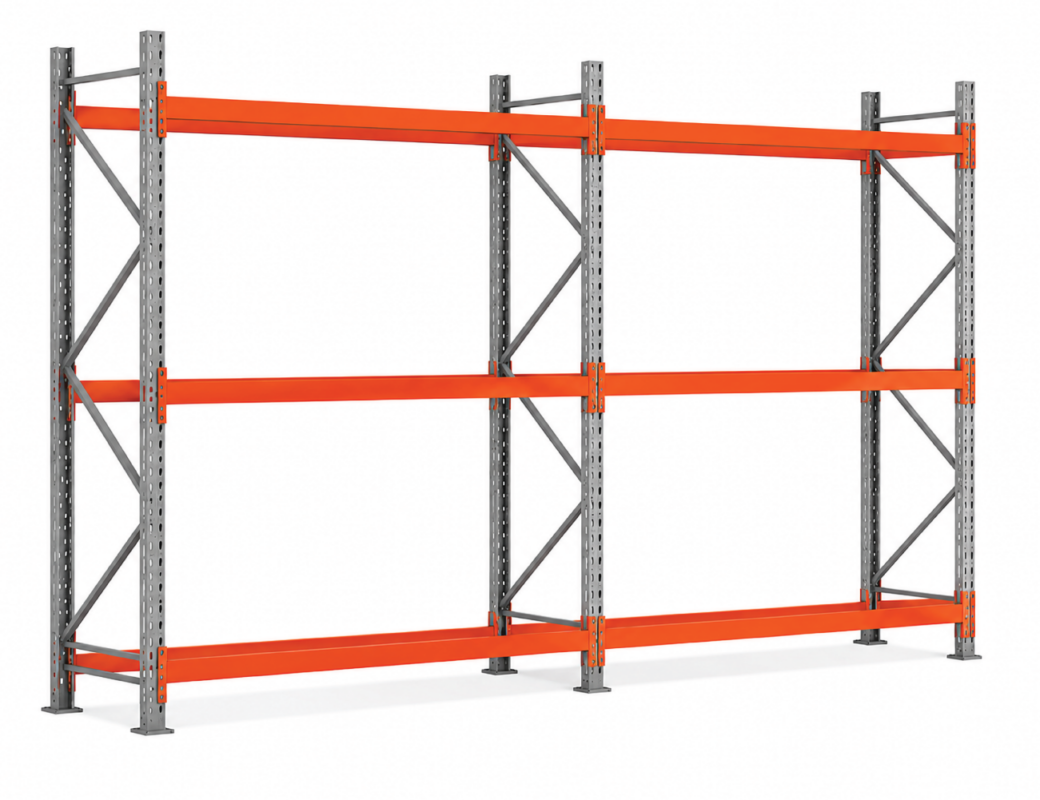
Single-Side Run
A run of racking accessed from one side.
Double-Sided Run
Two runs of racking positioned back-to-back and accessed from opposite sides.
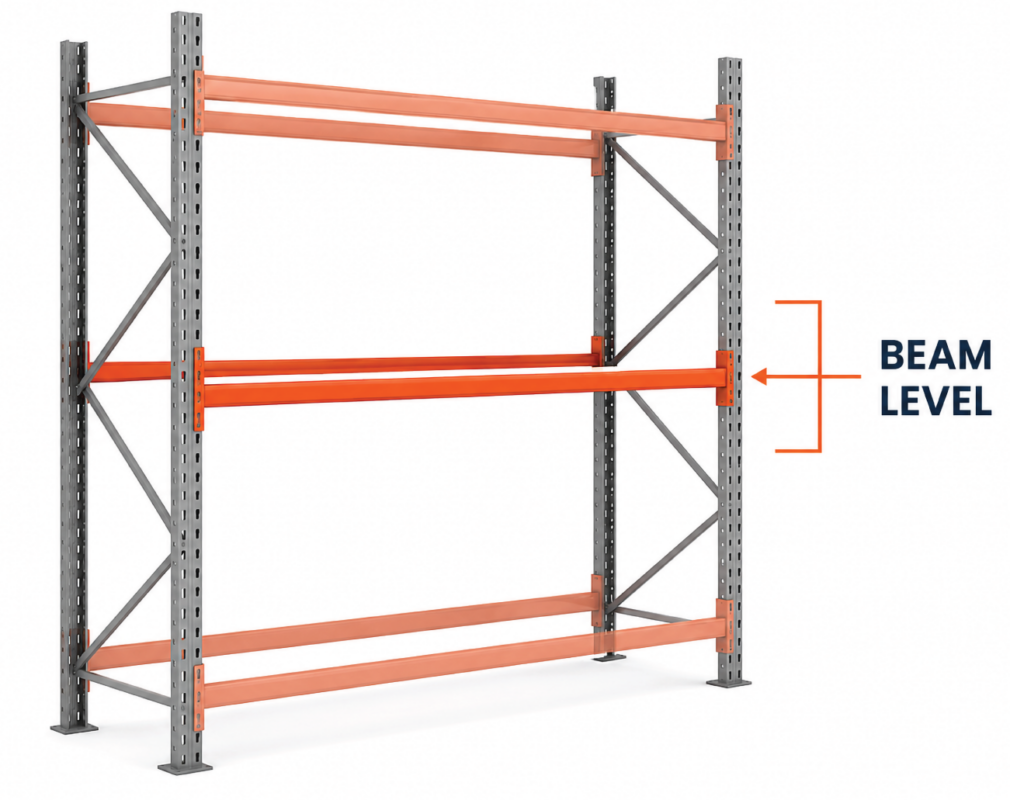
Beam Level
A horizontal storage level formed by a pair of beams
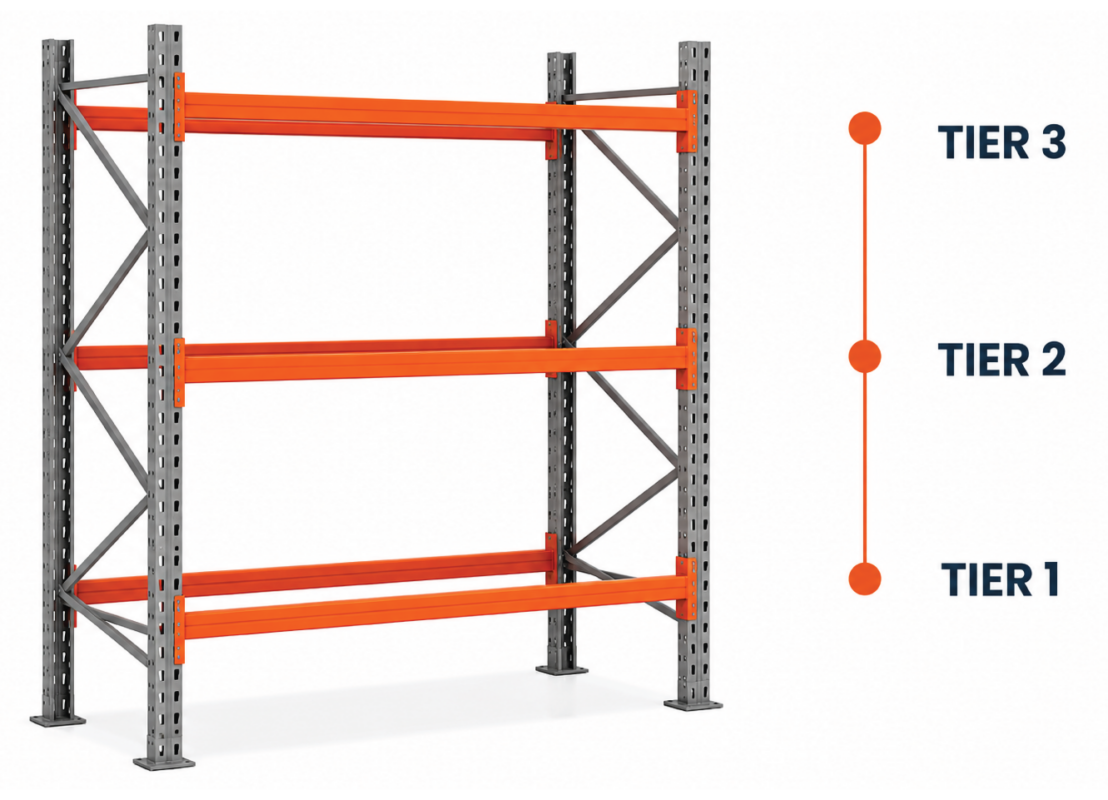
Tier
Each vertical position of a beam level within a racking structure.
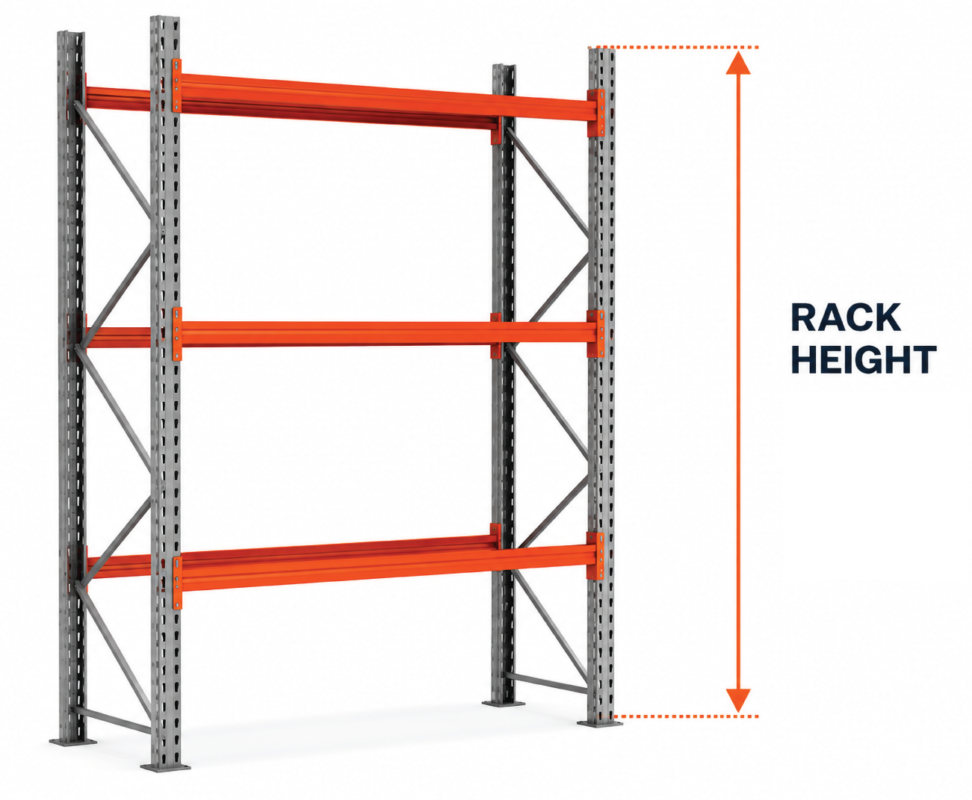
Rack Height
The overall height of the racking system.
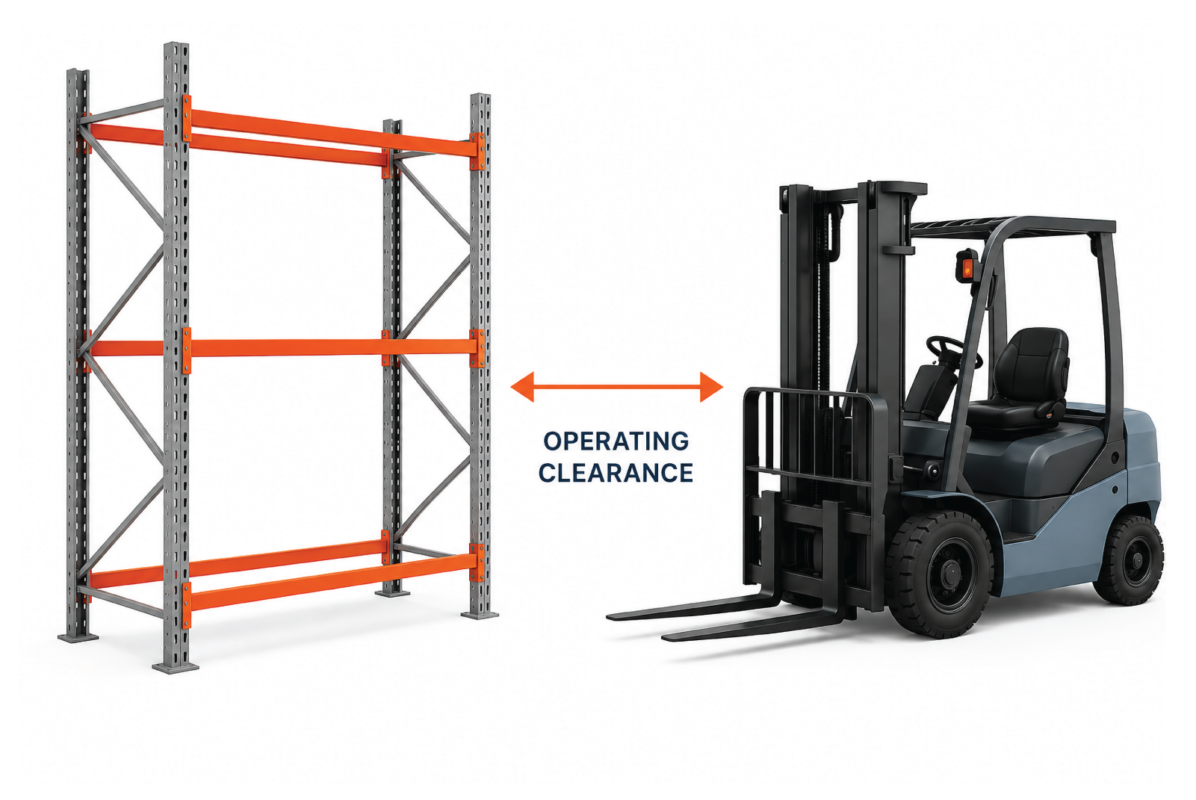
Operating Clearance
The space required between static and moving parts to allow equipment to operate safely.
Racking Layout Top View
This view shows how common racking layout terms are used in a warehouse.

SAFETY & INSPECTIONS
Competent Person
A person who has acquired, through training, qualifications or experience, the knowledge and skills required to carry out a task safely and effectively.
Competent Person for Formal Inspection
A person who carries out formal inspections should have appropriate industry experience and qualifications, understand the relevant racking systems and have the skills required to assess its installation and condition.
Formal Inspection
A detailed inspection of the racking system undertaken by a qualified person to identify damage, changes or other conditions that may affect its safe operation.
Informal Inspection
Informal inspections are teh responsibility of the end user of the racking and should be conducted frequently.
Safe Working Load (SWL)
The maximum permitted load for the racking in its specified configuration.
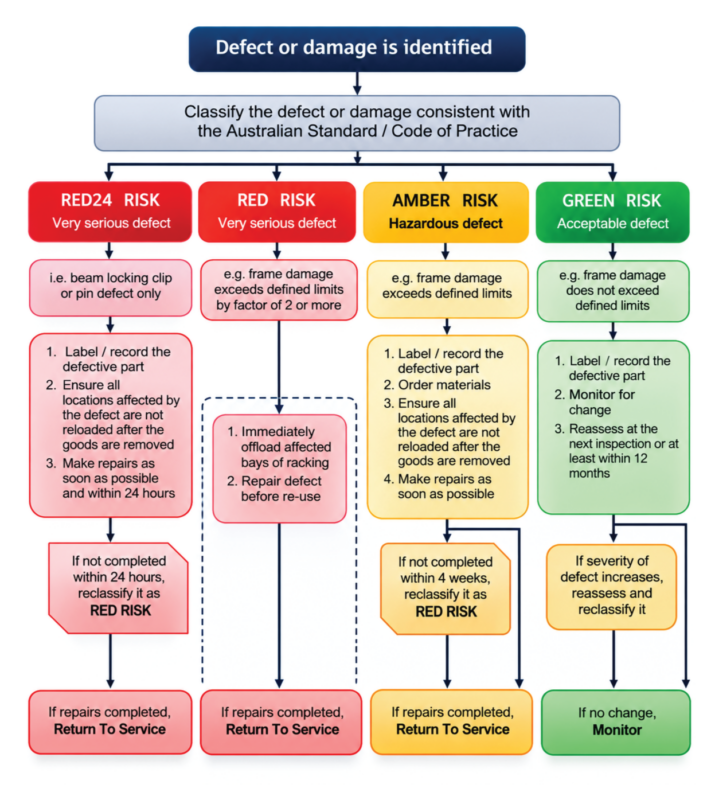
Know moreDamage Classification
The system used during inspections to categorise identified damage according to its severity and the action required.
GREEN RISK
Damage is within defined limits but should be recorded and monitored.
AMBER RISK
Damage requiring action within the specified timeframe.
RED RISK
Serious damage requiring immediate action.


SAFE WORKING LOAD SIGNS
Provide important information about how your racking system has been designed to be used.
RATED CAPACITY
There are two critical rated capacities related to racking and they should never be exceeded. They are:
- maximum unit load
- total rated capacity for each bay
Unit load is an individual stored item. eg a pallet having material that can be placed or retrieved in one operation.
Total weight of unit loads stored on a bay must not exceed the rated capacity of the bay.
This information should be provided to people who use the racks. One of the most effective means of providing this information is to mark it clearly in a visible location on the racking.
There should always be some way of determining the weight of each unit load being placed into the racking. See figure 1 for an example of safe working loads.
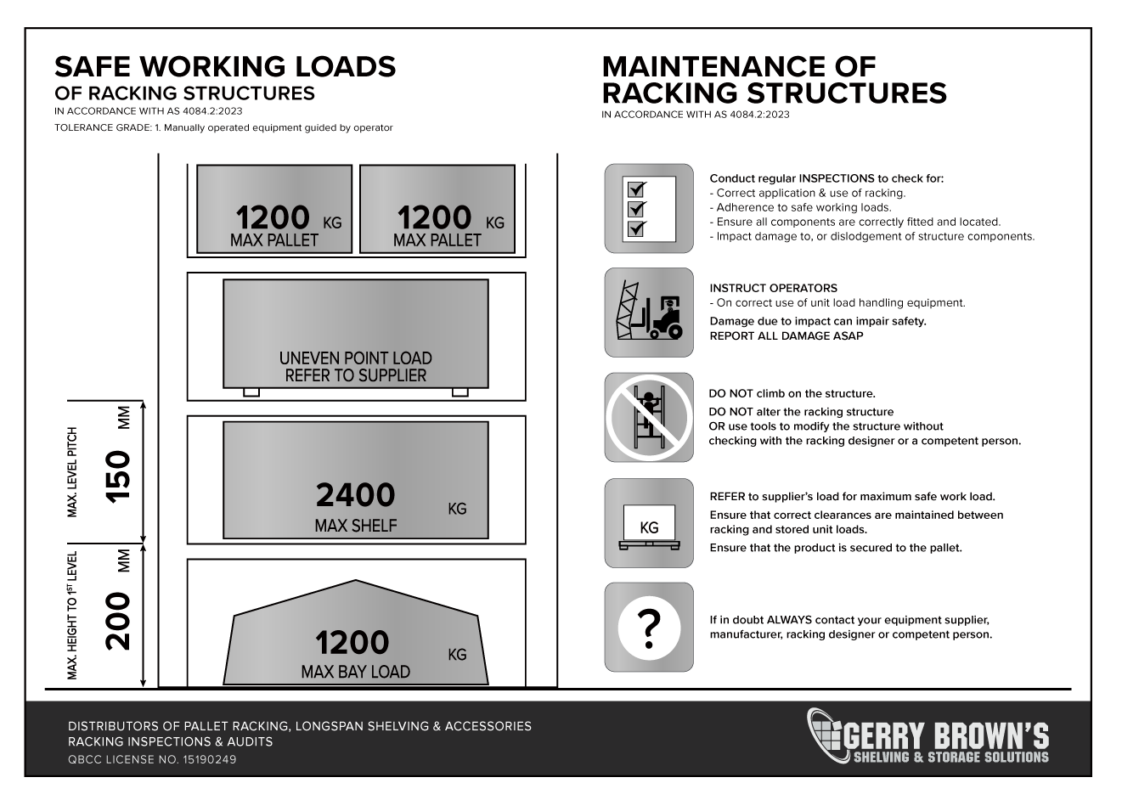
Figure 1.

MAXIMUM SHELF LOAD
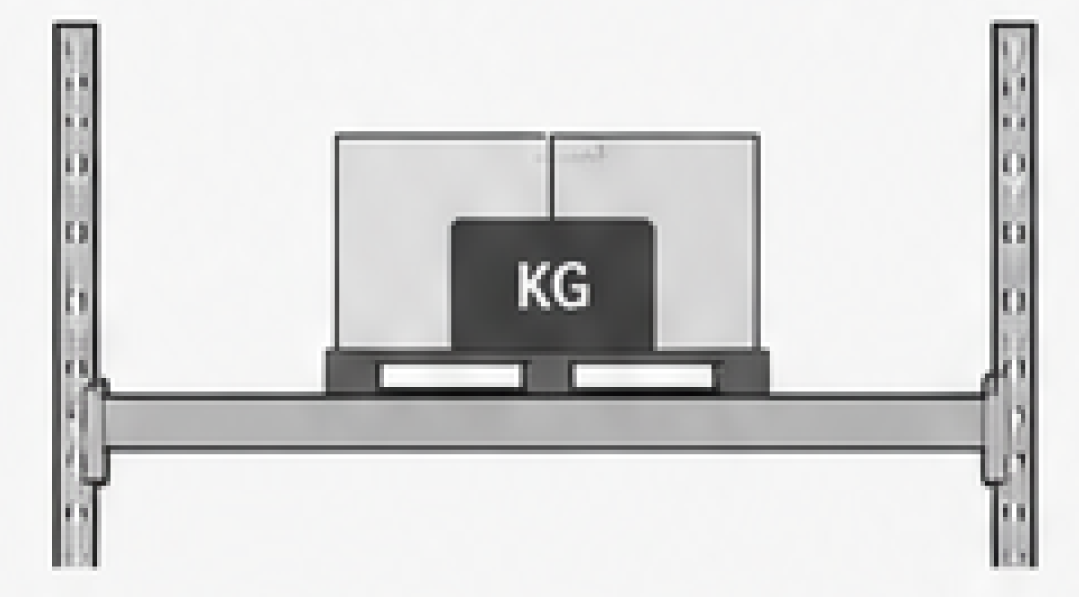
The maximum load permitted on that individual beam level. It applies to the complete level, not each pallet position.

MAXIMUM BAY LOAD
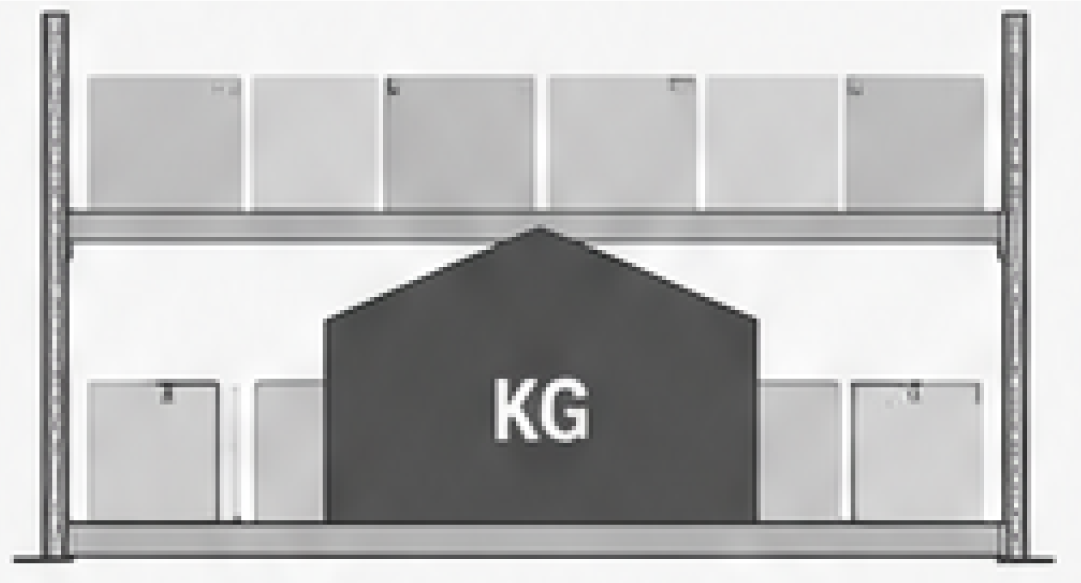
The total permitted load across the entire bay also matters.
Always consider the overall capacity of the bay.

BEAM LEVEL PITCH
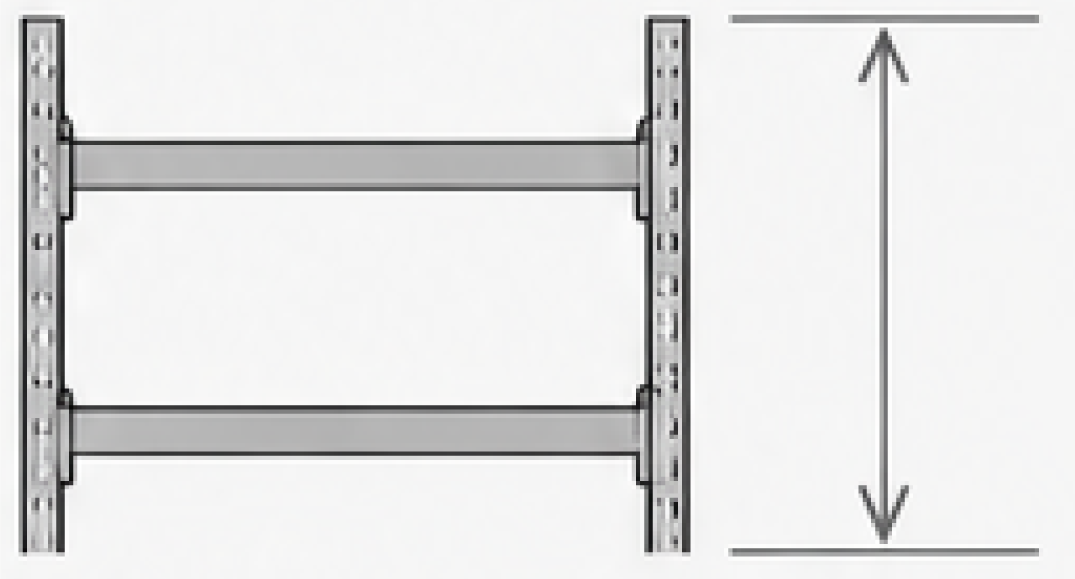
Changing beam levels can change how loads are distributed through the racking structure. Don’t assume your existing load rating still applies after altering your racking configuration.
Looking for more information?
Explore our resources to learn more about racking safety, standards and inspection services.
Shop Our Range Online.
From warehouse to workspace… we’ve got you sorted!

Flatpack Shelving

Cabinets & Cupboards
Plastic Storage

Flatpack Shelving

Plastic Storage


Louvre Panel

Lockers & Pigeon Holes


Lockers & Pigeon Holes